

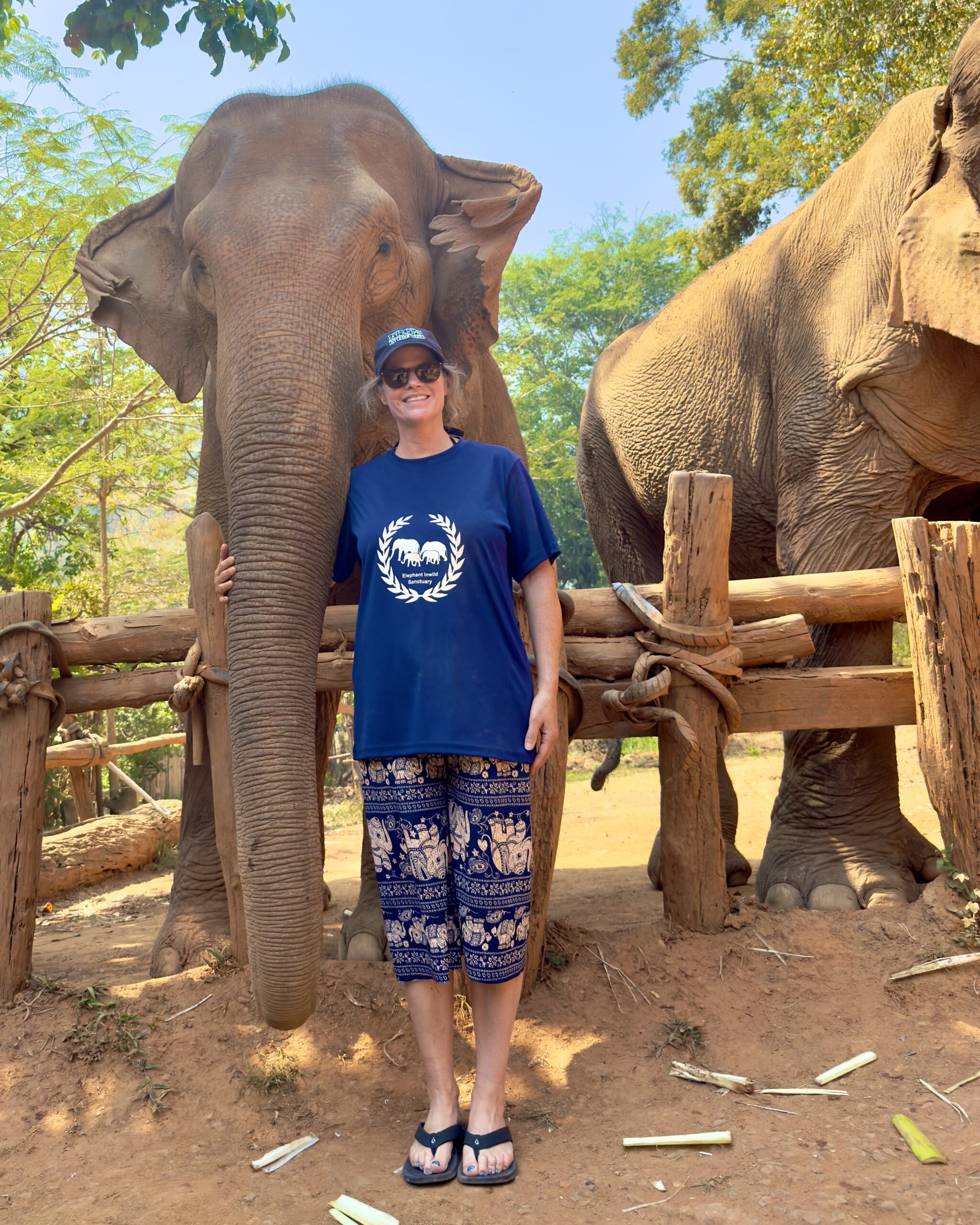
Being in the presence of elephants is not about access or novelty. It is about slowing down enough to meet them on their terms.
At Elephant In Wild Sanctuary in Chiang Mai, every part of the day was structured around consistency, calm, and predictability for the elephants. Before entering, we changed clothes and wore the same simple uniform a practice designed to reduce visual distraction, unfamiliar scents, and stress. It set the tone immediately: this was not about individuality or performance, but about respect.
Participation followed the elephants’ lead. Food preparation was part of daily care, offering insight into the time and attention required to nourish animals of this size and intelligence. Feeding was unhurried and optional, guided by the elephants’ interest rather than instruction.
Mud bathing and time in the river reflected natural behaviors rather than staged interaction. The elephants chose when to engage, when to move, and when to step away. In the water, there was no direction and no expectation only shared space. I captured a brief video from the river, not as a highlight, but as documentation of what coexistence can look like when humans step back.
FOR YOUR AWARENESS
Ethical wildlife experiences are defined by structure, restraint, and the animal’s ability to disengage. Limited interaction can be appropriate when it supports care routines and when animals retain autonomy at every stage.
Ethical presence requires boundaries.
Elephant Care & Interaction Snapshot
Observed on site at Elephant In Wild Sanctuary, Chiang Mai.
- Visitors changed into identical clothing to reduce visual and sensory disruption
- Elephants were free to approach, engage, or disengage at any time
- Food preparation supported nutrition and enrichment
- Mud bathing reflected natural skin-care behavior
- River time allowed elephants to move, cool, and socialize freely
- No riding, performances, hooks, or forced behaviors were involved
Consistency and predictability are foundational to ethical care.
The Experience
Changing clothes and wearing the same uniform set the tone immediately. It removed self-consciousness and hierarchy, creating a shared baseline of respect and attentiveness. Once dressed, the experience unfolded slowly and quietly, guided by the elephants rather than instruction.
Preparing food offered insight into the scale and intention behind daily care. Feeding was calm and unhurried, shaped by each elephant’s interest and pace.
The mud bath was not a spectacle, but a shared moment of natural behavior. Participation was gentle and optional, and the elephants used the mud as they chose.
Being in the river with the elephants felt especially grounding. The water belonged to them. Movement was quiet, unstructured, and entirely dictated by the elephants’ comfort. I captured a short video from this moment not as a performance, but as documentation of coexistence when humans step back and listen.
Why This Detail Matters
Requiring visitors to change clothes may seem small, but it reflects a larger philosophy: ethical encounters prioritize predictability, reduced stress, and respect over convenience or aesthetics.
Closing Reflection
Standing in a river with an elephant without directing, touching, or expecting anything reframes the entire idea of connection. When elephants are given space, dignity, and choice, the experience becomes less about memory-making and more about presence.
Sometimes the most meaningful encounters happen when we allow the wild to remain wild even while standing beside it.