

Quiet Protection Beneath the Surface
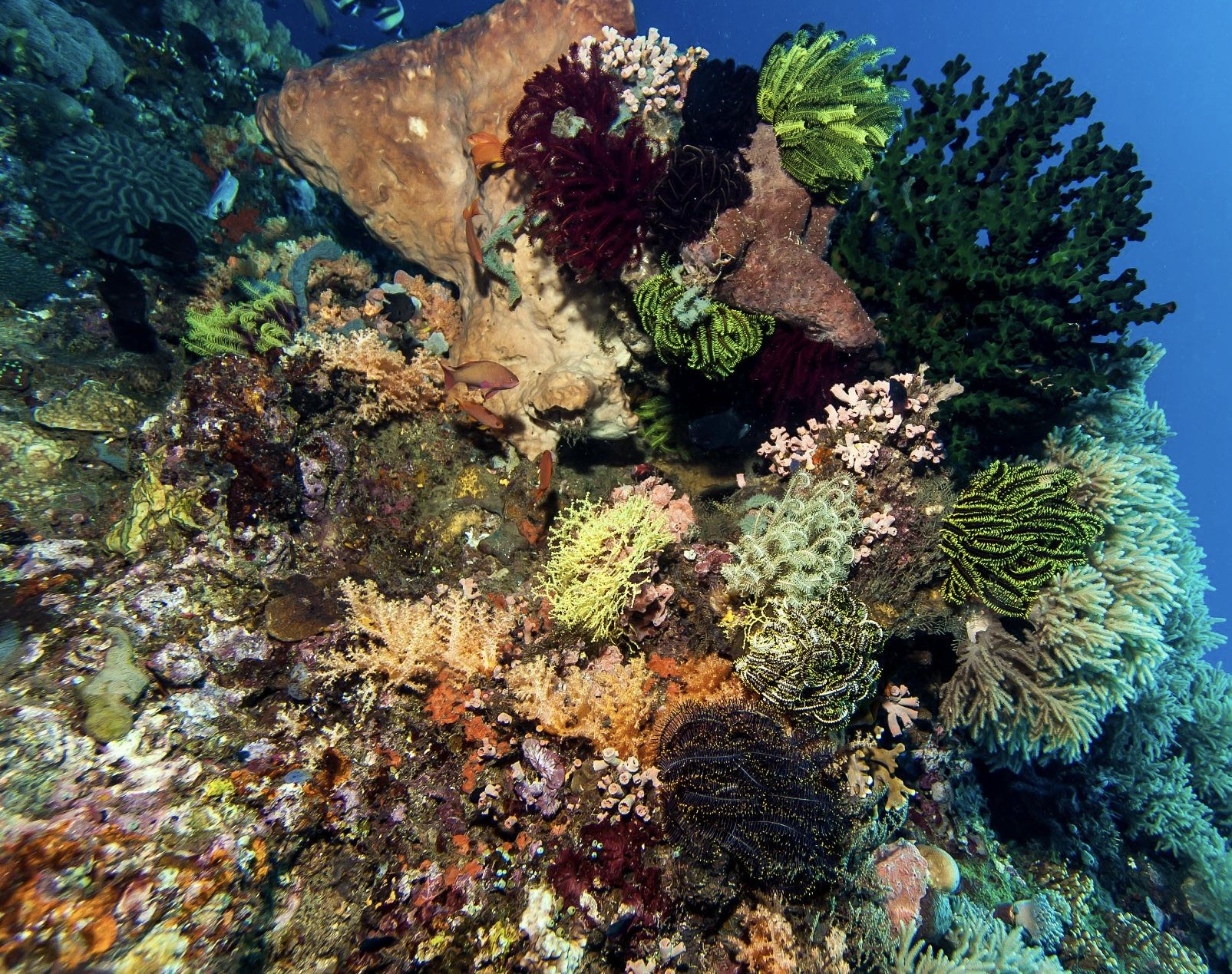
Bunaken National Marine Park, located off the coast of North Sulawesi, Indonesia, is one of the world’s most biologically rich marine protected areas. Steep reef walls, vibrant coral systems, and dense fish populations exist here not by accident, but because protection is enforced, respected, and maintained over time.
Being in the presence of coral reefs inside a marine protected area shifts perspective. The reef is not scenery. It is a living system shaped by balance, restraint, and continuity, where human access is permitted only within limits that prioritize long-term survival over short-term experience.
The Setting
I stayed at Siladen Resort & Spa, which serves as a quiet base for low-impact diving inside the park. The dive operation and crew emphasized preparation, conservation protocols, and respect for the marine environment at every step.
During this trip, I completed my Nitrox certification, a training that allows for longer bottom times while supporting safer, more controlled diving. The focus was never on how much could be seen, but on how to move through the reef without disrupting it.
Entering Protected Waters
Observation
Observed on site in Bunaken National Marine Park
Rolling backward off the dive boat marks a threshold moment. The noise of the surface disappears, movement slows, and awareness sharpens. Inside the park, the reef dictates the pace. There is no rushing, no chasing, no touching.
What stood out most was how intact the system felt. Fish density was high. Coral structures were complex and layered. Life occupied every available space, not as a spectacle, but as evidence that protection works when it is consistent.
The dive team moved with precision and calm, reinforcing that good diving is not about proximity, but about control, buoyancy, and patience.
Marine Protection Snapshot
- Bunaken National Marine Park protects coral reefs, reef fish, turtles, and pelagic species
- Steep reef walls support exceptional biodiversity and complex marine habitats
- Protection limits destructive fishing, anchoring, and unregulated tourism
- Healthy reefs act as nurseries, carbon sinks, and coastal protection systems
- Long-term reef survival depends on enforcement, education, and responsible access
Marine protected areas preserve not just species, but entire living systems.
Reef Life Observed on This Dive
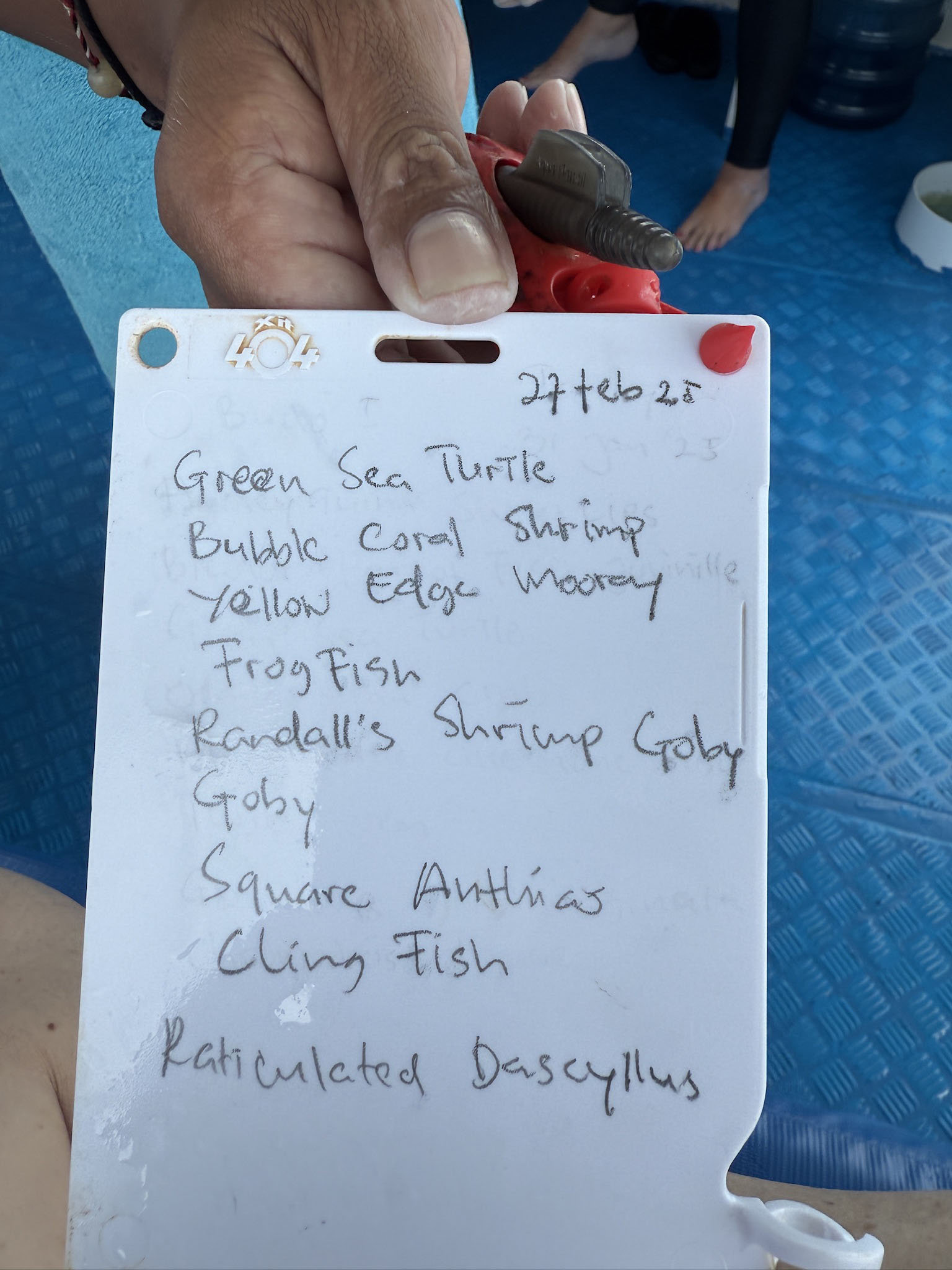
This visual record reflects the diversity made possible by conservation, not chance.
Looking Back / Looking Forward
Looking Back
For decades, coral reefs worldwide have suffered from overfishing, warming waters, pollution, and unregulated tourism. Many reef systems have collapsed quietly, without notice.
Looking Forward
Marine protected areas like Bunaken demonstrate what is still possible. When protection is enforced and access is intentional, reefs can remain resilient, complex, and alive.
Why This Still Matters
Coral reefs support ocean biodiversity, coastal stability, food systems, and climate balance. Their decline affects far more than marine life alone.
Protecting coral reefs is inseparable from protecting the oceans that sustain them, a responsibility reflected each year on World Oceans Day and carried forward through every meaningful conservation effort.
Ways to Help
- Support marine protected areas and conservation initiatives
- Choose dive operators committed to reef protection and education
- Reduce plastic use and ocean pollution
- Advocate for climate action that protects ocean systems
- Share conservation-focused awareness beyond travel imagery
Closing Reflection
Coral reefs do not need to be accessed to be appreciated. They need time, space, and protection.
Being in the presence of a living reef inside a marine protected area is a reminder that when humans step back, ecosystems remember how to thrive.