
Water Monitors Along the Chao Phraya River
Bangkok is often defined by movement, density, and sound. Yet along the edges of the Chao Phraya River, another rhythm persists. One shaped not by traffic or schedules, but by water levels, temperature, and instinct.
Urban waterways remain some of the last natural corridors through modern cities. Species that adapt to these spaces do not do so because cities are kind, but because rivers still offer access, cover, and continuity.
The Setting
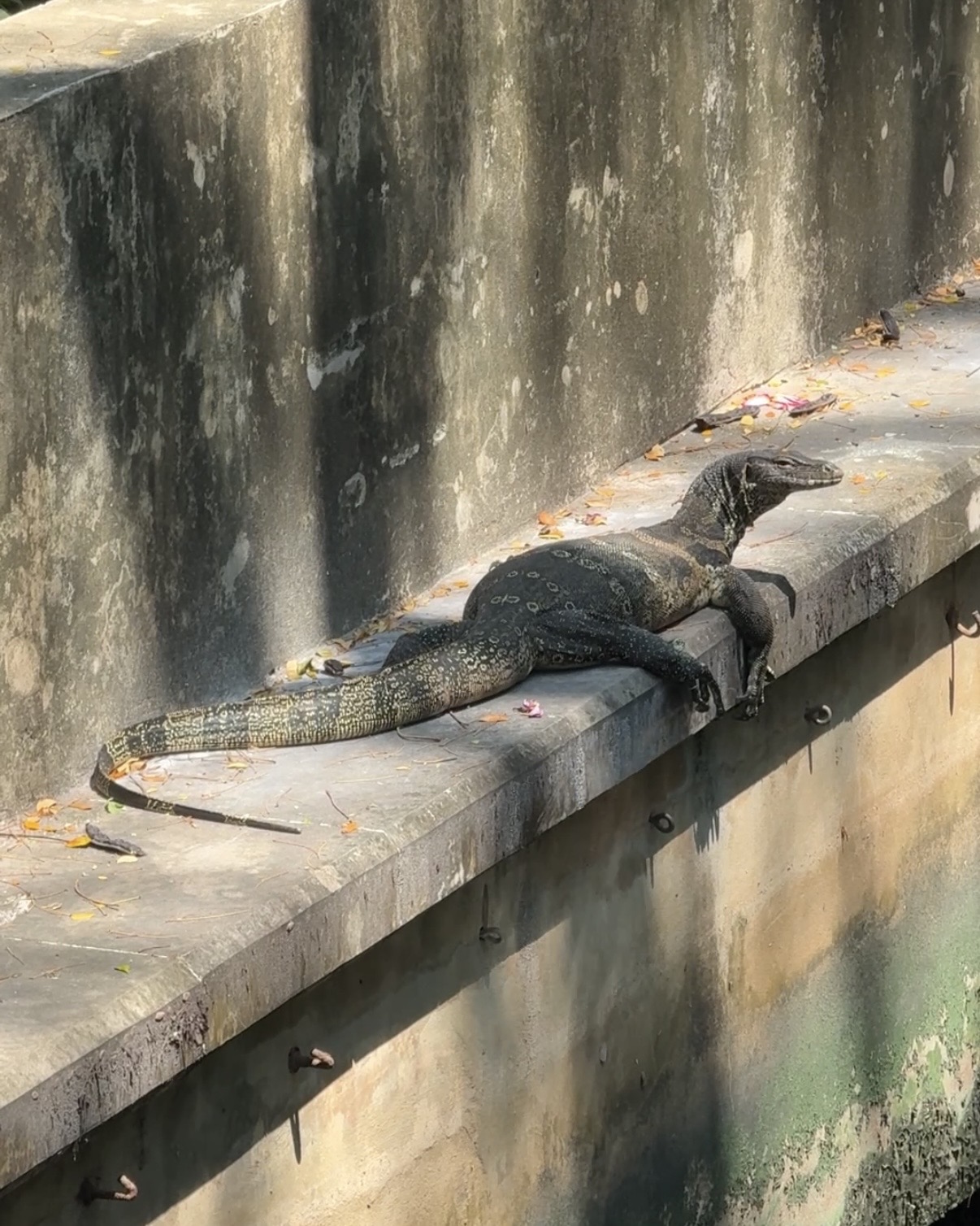
The riverfront grounds near The Peninsula Bangkok sit at the meeting point of landscaped space and a living waterway. Here, Asian water monitors are occasionally seen moving along the riverbank, basking in shaded areas, or slipping quietly between vegetation and water.
Their presence is unscheduled and uncurated. They are not part of the setting. They move through it.
Walking Along the Riverbank
Observation
Observed along the Chao Phraya River
What stood out most was not the size of the water monitor, but its composure. It moved slowly and deliberately, aware of its surroundings but unaffected by being seen.
There was no display and no reaction. The monitor followed the riverbank as it likely has for generations, guided by water, shade, and instinct rather than the city that has grown around it.
Urban Wildlife Snapshot
- Asian water monitors are native to Southeast Asia and closely tied to river and wetland systems
- They are strong swimmers and play an important role as scavengers within their ecosystems
- Urban rivers act as essential wildlife corridors when natural habitats are reduced
- Coexistence depends on tolerance, space, and the protection of water access
Urban wildlife survives not through accommodation, but through persistence.
Looking Back / Looking Forward
Looking Back
As cities expanded, rivers were often treated as infrastructure rather than ecosystems, fragmenting habitats and limiting wildlife movement.
Looking Forward
Protecting waterways, riverbanks, and green buffers allows species to continue navigating urban environments without forced interaction or conflict.
Why This Still Matters
Urban ecosystems challenge the idea that nature exists only in remote or protected places. When rivers remain intact, they sustain life far beyond what is immediately visible.
Protecting waterways preserves movement, balance, and the possibility of coexistence.
Ways to Help
- Support urban river and waterway protection initiatives
- Avoid feeding or approaching wild animals
- Respect wildlife boundaries in shared spaces
- Advocate for green corridors and habitat connectivity
Closing Reflection
Some encounters are not meant to be approached or interpreted. They are meant to be noticed and left undisturbed.
In the presence of urban wildlife, coexistence is defined not by closeness, but by restraint.