


Honoring Elephants Through Awareness, Respect, and Protection
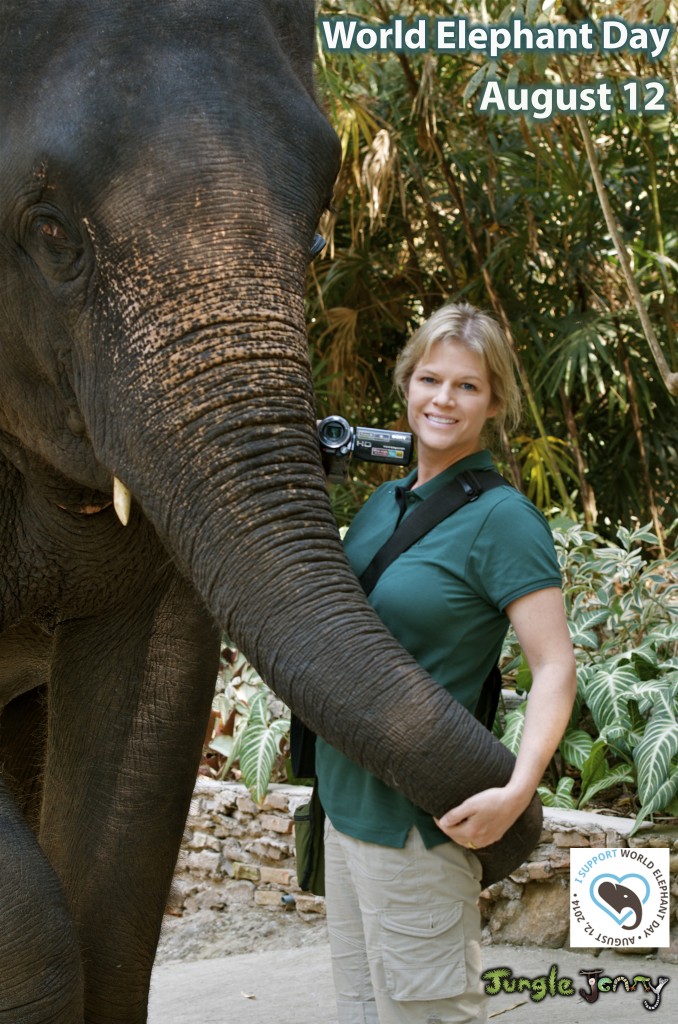
About World Elephant Day
World Elephant Day, observed each year on August 12, exists to recognize elephants not only for their size and intelligence, but for their vulnerability in a rapidly changing world.
Elephants are deeply social, emotionally complex animals whose survival is increasingly threatened by habitat loss, human conflict, captivity, and illegal wildlife trade. Awareness, however, must move beyond admiration. True protection begins with understanding how our choices, policies, and interactions shape their future.
FOR YOUR AWARENESS
Elephants are among the most intelligent and emotionally complex animals on Earth. They experience grief, joy, memory, and deep family bonds.
Despite global admiration, elephants continue to face escalating threats from habitat loss, captivity, human conflict, and illegal wildlife trade.
Awareness is only meaningful when it leads to informed, ethical action.
Understanding elephants begins with recognizing the depth of their intelligence, social structure, and emotional lives.
Interesting Facts About Elephants
1. African elephants are the largest land mammals on the planet.
2. One of the largest known elephants was Jumbo, whose name is thought to be derived from the Swahili word for ‘boss’ or ‘chief.’ He is the reason we now use the word ‘jumbo’ to mean ‘huge’.
3. Elephant brains weigh 5 kg, much more than the brain of any other land animal.
4. Their brains have more complex folds than all animals except whales, which is thought to be a major factor in making them some of the most intelligent animals on Earth.
5. Elephants have a more developed hippocampus, a brain region responsible for emotion and spatial awareness, than any other animal.
6. Studies indicate that they are superior to humans in keeping track of multiple objects in 3D space.
7. Elephants commonly show grief, humor, compassion, cooperation, self-awareness, tool use, playfulness, and excellent learning abilities.
8. An elephant in Korea surprised its zoo keepers by independently learning to mimic the commands they gave it, successfully learning 8 words and their context.
9. There are many reports of elephants showing altruism toward other species, such as rescuing trapped dogs at considerable cost to themselves.
10. No matter what the movies taught you, elephants don’t like peanuts.
11. Elephant herds are matriarchal.
12. Female elephants live in groups of about 15 animals, all related and led by the oldest in the group. She’ll decide where and when they move and rest, day to day and season to season.
13. An elephant herd is considered one of the most closely knit societies of any animal, and a female will only leave it if she dies or is captured by humans.
14. Bull elephants court females by using rituals involving various affectionate gestures and nuzzles.
15. Female African elephants undergo the longest pregnancy — 22 months.
16. Elephants have been know to induce labor by self-medicating with certain plants.
17. Elephant calfs weighs more than 100 kg at birth.
18. Baby elephants are initially blind and some take to sucking their trunk for comfort in the same way that humans suck their thumbs.
19. Mothers will select several babysitters to care for the calf so that she has time to eat enough to produce sufficient milk for it.
20. Males will leave the herd as they become adolescent, around the age of 12, and live in temporary “bachelor herds” until they are mature enough to live alone.
21. Male elephants are normally solitary and move from herd to herd.
22. Homosexual behavior in elephants is common and well-documented.
23. Asian elephants don’t run.
24. Elephants can recognize themselves in a mirror.
25. Elephants can get sunburned, and protect themselves by throwing sand on their backs and their head.
26. To protect their found from the sun, adult elephants will douse them in sand and stan over the little ones as they sleep.
27. Elephants are very social, frequently touching and caressing one another and entwining their trunks.
28. Elephants demonstrate concern for members of their families and take care of weak or injured members of the herd.
29. Elephants grieve for their dead.
30. Even herds that come across an unknown lone elephant who has died will show it similar respects.
31. There are reported cases of elephants burying dead humans.
32. Elephants seem to be fascinated with the tusks and bones of dead elephants, fondling and examining them.
33. The rumor that they carry bones to secret “elephant burial ground,” however is a myth.
34. An adult elephant needs to drink around 210 liters of water a day.
35. It’s true that elephants aren’t fans of tiny critters.
36. African elephants avoid eating a type of acacia tree that is home to ants because they don’t want the ants to get inside their trunks, which are full of sensitive nerve endings.
37. Elephants sleep standing up.
38. Elephants communicate within their herds or between herds many kilometers away by stamping their feet and making sounds too low for human ears to perceive.
39. Both female and male African elephants have tusks, but only male Asian elephants have tusks.
40. An elephant can use its tusks to dig for ground water.
41. They evolved large, thin ears to help regulate their body temperature and keep cool.
42. The elephant’s trunk is able to sense the size, shape, and temperature and keep cool.
43. An elephant uses its trunk to lift food and suck up water, then pour it into its mouth.
44. An elephant’s trunk can grow to be about 2 meters long and can weigh up to 140 kg.
45. Scientists believe that an elephant’s trunk is made up of 100,000 muscles.
46. Elephants can swim — they use their trunk to breathe like a snorkel in deep water.
47. Elephants are herbivores and can spend up to 16 hours a day collecting leaves, twigs, bamboo and roots.
48. The elephants closest living relative is the rock hyrax, a small furry mammal that lives in rocky landscapes across sub-Saharan Africa and along the coast of the Arabian peninsula.
49. Between 12,000 – 15,000 of the world’s elephants are living in captivity.
50. Approximately 30% of the entire Asian elephant population is currently in captivity.
51. The largest single population of captive elephants is in India — about 3,400 elephants.
52. There are about 1,000 captive African elephants worldwide, and most of them are housed outside of Africa with approximately 40% in Europe.
53. There are around 197 elephants in European circuses (123 Asian and 74 African).
54. Bans on wild animals in circuses have been adopted in Bolivia, Austria, Czech Republic, Denmark, Estonia, Finland, Hungary, Poland, Peru, Portugal, Sweden, Singapore, Costa Rica, India, and Israel.
55. More than 30 localities in Canada and some counties in the United States have banned shows with wild animals.
56. A ban on wild animals in circuses in the U.K. will come into effect in December 2015.
57. From 1994 to 2005, at least 31 circus elephants died prematurely.
58. Since 1990, more than 60 people have been killed and more than 130 others seriously injured by captive elephants.
59. In 1903, a female Asian elephant named Topsy was killed by electrocution. She had been smuggled into the United States while young and went through years of physical and mental abuse as a circus elephant before killing her trainer.
60. In 1962, a male Indian elephant named Tusko was injected with 297 mg of LSD by researchers from the University of Oklahoma — more than 1,000 times the dose typical of human recreational use. He died one hour and forty minutes later.
61. Elephants have no natural predators. However, lions will sometimes prey on young or weak elephants in the wild.
62. The main risk to elephants is from humans through poaching and changes to their habitat.
63. The street value of elephant ivory is now greater than gold, running to tens of thousands of pounds/dollars per tusk.
64. More than 20,000 African elephants were slaughtered in 2013, according to the Convention on International Trade in Endangered Species of Wild Fauna and Flora.
65. The Kenya Wildlife Service has documented the killing of 97 elephants so far this year.
66. According to Dr. Paula Kahumbu, who leads the Hands Off Our Elephants campaign, elephant poaching in Kenya is at least 10 times the official figure.
67. Poachers in Kenya have enjoyed lenient sentences and few have been successfully prosecuted.
68. A study by Wildlife Direct found that over the past five years just 4% of those convicted of wildlife crimes were sent to jail.
69. New legislation passed earlier this year that should lead to higher conviction rates and tougher sentences.
70. The global ivory trade was worth an estimated $1 billion over the past decade, with 80% of ivory from illegally killed elephants.
71. The total global elephant population is currently estimated at 650,000 and are very much in danger of extinction.
72. Click here to find out which Organizations are working to protect elephants.
These interesting facts were found here.
Looking Back / Looking Forward
Looking Back
When I first wrote this post, my goal was to share meaningful information about elephants and highlight why they deserve protection, respect, and understanding.
Looking Forward
Since then, my experiences with elephants across different regions have deepened my perspective. Today, my focus includes not only awareness, but also ethical engagement, habitat preservation, and supporting conservation efforts that prioritize the well-being of elephants over entertainment.
Why This Still Matters
Elephants continue to face increasing pressure as human development expands into their habitats. Conservation is not static; it evolves alongside environmental challenges, climate change, and human behavior.
What we choose to support today shapes the future of these animals.
Protecting elephants is inseparable from protecting the landscapes they depend on, a responsibility reflected each year on World Habitat Day.
Ways to Help
- Support ethical elephant sanctuaries and conservation organizations
- Avoid elephant riding or performance-based attractions
- Educate others using accurate, science-based information
- Advocate for habitat protection and coexistence efforts
Closing Reflection
Elephants have taught me that strength and gentleness can coexist, and that true respect means protecting what we admire rather than consuming it.