
Fighting Massive Declines in Frog Populations With Bacteria and Fungicides


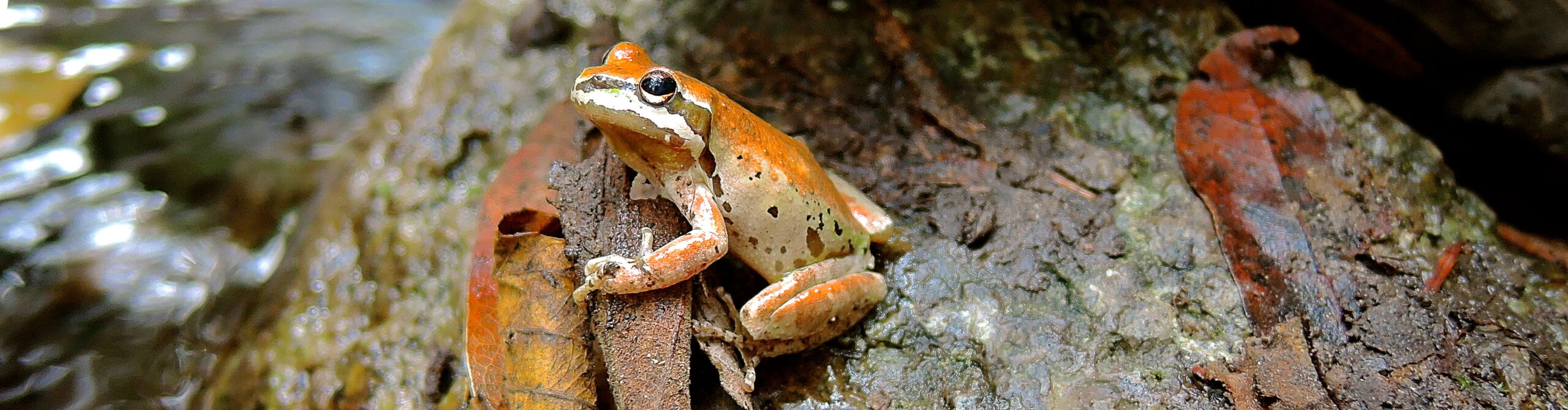
A microscopic chytrid fungus is causing massive declines in frog populations all over the world and even the extinction of certain species.
http://www.sciencedaily.com/releases/2011/06/110620094856.htm

A Last Stand for the Xingu
320 Indigenous Representatives From 18 Ethnicities From the Xingu Basin and Beyond Gathered At An Assembly In Piaraçu In May 2011.
They were joined by leaders of the Xingu Alive Forever Movement (MXVPS), who brought news from endangered communities of Altamira, and Amazon Watch staff. Called by the legendary elder Kayapó Chief Raoni Metyktire, the assembly aimed to discuss the impending human rights and environmental disaster that is the Belo Monte Dam on the Lower Xingu – in particular the menace it represents to Brazil’s indigenous peoples – and ways for its opponents to forge a single and unified force to resist its construction. Article found on Amazon Watch.
[youtube HvbOTrczxAA http://www.youtube.com/watch?v=HvbOTrczxAA&feature=player_embedded]
Watch Scenes from a historic indigenous gathering held in the Kayapó village in the Amazonian state of Mato Grosso.
BLUEMIND: Your Brain On Ocean
A look at the Ocean through the field of Neuroscience At The California Academy of Sciences Thursday, June 1-2, 2011

Why do books and symposia about the human brain, the most complex object in the universe, contain no mention of the ocean…. or even the rain forest? Why do books and conferences on protecting and restoring the world’s oceans and our world’s rain forests entirely overlook the field of cognitive neuroscience? This conference is the first of it’s kind!
Underlying this project is the exploration and sharing of the way neuroscience informs our connection to our biosphere–our one blue marble–to help inspire people to LiVEBLUE.  That’s the BLUEMIND part.
BLUEMiND will forever link studies of the mind and ocean in a two-day event held at the California Academy of Sciences in San Francisco, California, kicking off World Oceans Week 2011. BLUEMiND includes a reception on June 1st, a full day summit and a NightLife ocean party inside the academy with upwards of 4,000 people in attendance. This is the first of it’s kind, and is meant to help frame what we believe is an emerging field that unites neuroscience and ocean stewardship.
Day one and two explored the relationship between the Ocean and the brain, and brought leading neuroscientists, communicators, and citizens together to engage in this dialog.
CLICK HERE FOR TODAY’S AGENDA.
Girl Scouts Working On Replacing Palm Oil Ingredient In Their Cookies
Since 1917, Girl scouts have been selling their cookies and all 16 varieties of the cookies contain palm oil.
During a two-hour meeting last Tuesday morning at Girl Scouts of the USA headquarters in New York City, scout officials agreed to research palm oil to determine if they can get more of the ingredient from rain forests that haven’t been cleared for palm oil plantations, or if they can replace it with something else.

Palm oil has been used for centuries as cooking oil and it has integrated itself seamlessly into our lives. Common products like soap, detergent as well as processed food like chocolate and cereal include palm oil. In fact about 50% of the products we use contain palm oil [Source: Rainforest Action Network]. It’s low price and high saturation point make it attractive to food processing companies as well as oil companies. This increased demand for palm oil is leading to increased deforestation in already threatened areas like Brazil, Malaysia and Indonesia.

Palm Oil -- A Rainforest's Most Deadly Commodity
Palm oil has been a rainforest’s greatest enemy next to lumber companies, but there is hope for sustainable palm oil. The creation of the RSPO (Roundtable of Sustainable Palm Oil) as well as Brazil’s new plan for sustainable oil are all steps in the right direction. The only problem is to find a way to stop the damage in Indonesia and Malaysia.
Endangered Species Day 2011
Most Threatened Animals Around The World

Click On Photo To Read Article. Photos Found On Treehugger: Photo Credits-Creative Commons
Endangered Species Day is an opportunity for people young and old to learn about the importance of protecting endangered species and everyday actions that people can take to help protect our nation’s disappearing wildlife and last remaining open space. Protecting America’s wildlife and plants today is a legacy we leave to our children and grandchildren, so that all Americans can experience the rich variety of native species that help to define our nation.


Click Here & Make Your Promise to Help!
Endangered Species Day is a time to think about the Endangered Species Act, which is one of the nation’s most controversial laws that has often pitted environmentalists against industry and private-property rights advocates.
10 Easy things you can do at home to protect endangered species – Click Here
Rare Black Lion Tamarin Monkey Born In Captivity
On March 22, 2011 one of the world’s most endangered primates was been born by Caesarean section at the headquarters of the Durrell Wildlife Conservation Trust.
“This birth is great news; monitoring and successfully delivering the baby has been a very tricky event to manage,” says Mark Brayshaw, head of Durrell’s animal collection.

Photo Found On BBC Nature News: Black Lion Tamarin Monkey
With fewer than 1,000 black lion tamarins remaining in the wild, these monkeys are critically endangered.
To Read Entire Article, Click Here or On Photo Above.
New Study, New Hope For Critically Endangered Species
New study for species considered ‘too rare to save’ such as the Siberian Tiger. By targeting key threats, critically endangered species may now have new hope!

Siberian Tiger
Co-author of the report, Dr. Philip Stephens, School of Biological and Biomedical Sciences, Durham University, said: “Populations usually show rapid declines as a result of human activities such as hunting and habitat conversion. The results of the study are encouraging and show that if we can remove the negative effects of human activities, even relatively small populations could be viable in the long term.”
Dr. Greg Hayward, the U.S. Forest Service’s (USFS) regional ecologist for Alaska said: “This is good news for biologists working to save species like the tiger. There’s a lot of work to do to arrest the effects of poaching, prey loss and habitat destruction. However, if that work is successful, the tiger might yet be able to recover, despite the relatively small size of most tiger populations.”
The study, published in the journal, Trends in Ecology and Evolution, shows that population sizes required for long-term viability vary, both within and among species, and depend on the specific circumstances in which the population is found. Estimates of viable population sizes were typically reduced to hundreds rather than thousands of individuals for populations that were relatively stable.
To read entire article, click here.
One Of 5 “Lost” Amphibian Species Recently Rediscovered
See-Through Frog

Photograph Found On National Geoographic's Site: Courtesy Of Eli Greenbaum
Not seen since the 1950’s, this remarkable see-through frog, which is pregnant bursting with eggs, is one of five “lost” amphibian species recently discovered in the Democratic Republic of the Congo (DRC). For more information about this five new discoveries, go to: Lost Frogs Found Article.
NOTE: A mass extinction to many amphibians is occurring right now due to habitat loss, pollution, climate change and an exotic fungus called “chytrid fungus“, which is a result of global warming.
Click On The Photos Below – To Read About The Other 4 Frogs Rediscovered!
 High-Altitude Frog

Fingernail-Sized Frog


Forest Survivor Frog

Puddle Frog
Celebrating Mother’s Day
Click On The Photo Below To Go To National Geographic’s Slide Show Of
Animal Mothers & Their Babies:Â Happy Mother’s Day!
