

SAVE The Frogs Day – April 29, 2011
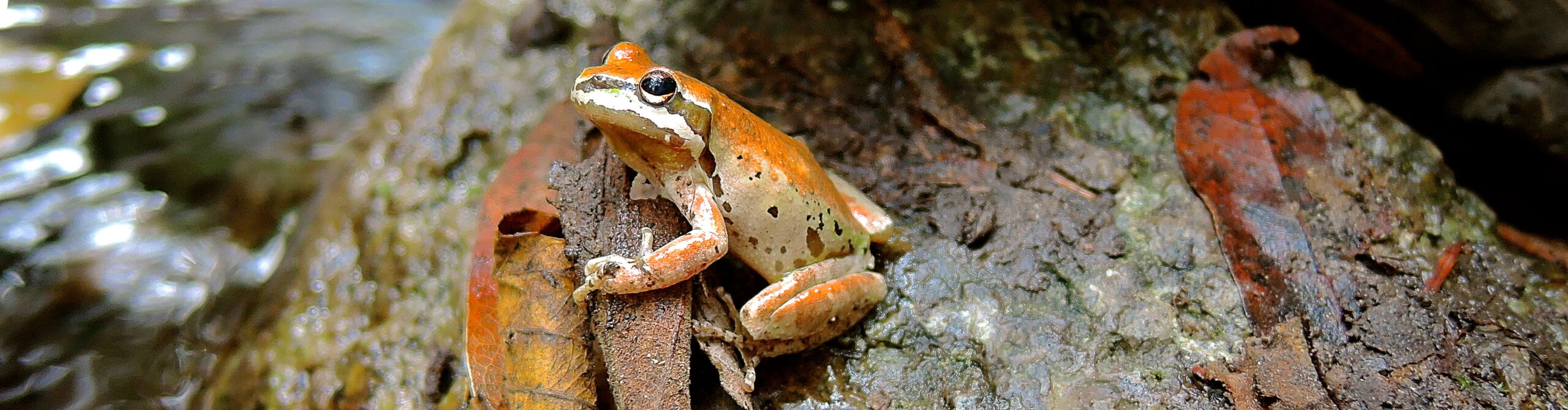
 Amphibian populations have been rapidly disappearing worldwide and nearly one-third of the world’s amphibian species are on the verge of extinction. Up to 200 species have completely disappeared since 1979. Founded in 2008, SAVE THE FROGS! is America’s first and only public charity dedicated to amphibian conservation. Their mission is to protect amphibian populations and to promote a society that respects and appreciates nature and wildlife.
Please become a member and support their worldwide amphibian conservation efforts. Together we can SAVE THE FROGS!
 Connect With Save The Frogs On Facebook HERE!
 California Has 3 Species Of True Frogs: Native Reg-Legged Frogs (Now Becoming Scare Because Of Habitat Loss) and Yellow Legged Frogs, and The East Coast Import, The Bullfrog.
California Red-legged Frogs are typically found only in California. They are approximately 2-5.5 inches in length and are brown, gray, olive or red with black fle…cks and blotches. They have a whitish border above their upper jaw and their underside is normally red. These frogs toes are not fully webbed and have weak throaty calls that last 2-3 seconds. California Red-legged Frogs are often found in dense, shrubby vegetation near bodies of water. In 1996, they were listed as a threatened species by the United States Fish and Wildlife Service due to habitat destruction, being sold as food, and being preyed upon by non-native species.
9 Tips To Save Our Fragile EARTH
 1. Recycle newsprint, cardboard, plastic, and other household waste. This can reduce emissions of carbon dioxide (CO2), a greenhouse gas that many scientists believe contributes to global warming.
2. Walk, ride your bike, or carpool. Driving 15 minutes less a week can save 900 pounds (408 kg) of CO2 a year.
3. Buy snacks in bulk. By doing away with individual wrappers, you’ll throw away less of the 5 pounds (2 kg) of trash each person pitches every day.
4. Put on a sweater. Don’t turn up the heat when you’re chilly. Wear more clothes and turn down the temperature! Doing so can keep 300 pounds (136 kg) of CO2 out of the air each year.
5. Always turn off the lights when you leave a room.
6. Change incandescent lightbulbs to compact fluorescent lights. Just one could save 500 pounds (227 kg) of coal a year.
7. Plant a tree to put more oxygen into the atmosphere.
8. Drive better. Ask your loved ones to drive a more fuel-efficient car. An electric or hybrid car can save 5,600 pounds (2,540 kg) of CO2 a year.
9. Stop water waste. In many homes, toilets use more water than anything else. An older toilet may use more than 5 gallons (19 L) of water each time it’s flushed! Try this only with an oldr toilet. Clean out a one-gallon plastic jug (a milk or juice container will work), and make sure you take off any labels. Fill the jug with stones to make it heavy. Place the jug into the toilet tank, being very careful that it doesn’t tough any of the toilet’s inner workings. Now every time that toilet is flushed, it’s using a gallon of water less than it used to!
NOTE: Did you know that the average U.S. household receives one-and-a-half trees’ worth of unwanted mail each year? Much of it is trashed, unopened!
________________________________________________________________________________________________
What Do You Want For Earth?
I Want Clean Air.
I Want Food Without Destruction.
I Want Water Without Pollution.
I Want Our Rain Forests Intact.
I Want To Keep Our Oceans Alive
…and Our Polar Seas Pristine.
I Want An Energy Revolution.
Give Earth A Hand… Today and Everyday!
[vsw id=”Ep9MFiWXR8M” source=”youtube” width=”525″ height=”444″ autoplay=”no”]
Remembering The BP Oil Spill 1 Year Later
One year ago, the BP Deepwater Horizon disaster took 11 lives, discharged about 200 million gallons of oil into the Gulf of Mexico and destroyed the livelihoods of many Gulf of Mexico residents. Thousands of marine animals were killed and many more harmed. Read more about why offshore oil drilling is Not the Answer.

The offshore drilling rig Deepwater Horizon burns in the Gulf of Mexico in April, 2010
IACHR Calling For A Suspension Of The Belo Monte Dam in The Brazilian Amazon
Good News! Yesterday, the Inter-American Commission on Human Rights issued precautionary measures regarding the Belo Monte Dam, in Brazil.

Photograph: Antonio Scorza/AFP/Getty Images
Earth Hour 2011
At 8:30 PM on Saturday 26th March 2011, lights will switch off around the globe for Earth Hour and people will commit to actions that go beyond the hour.
[vsw id=”4Mxjbip6y04″ source=”youtube” width=”525″ height=”444″ autoplay=”no”]
With Earth Hour almost upon us, our thoughts are with the people of Japan during this incredibly challenging and sad time for their country.
World Water Day 2011
CONSERVE, PROTECT, RESTORE H2O On Earth
Revive The Health Of Our Water – CPR 4 Earth!
WHAT IS YOUR WATER FOOTPRINT? CLICK HERE
The objective of World Water Day 2011 is to focus international attention on the impact of rapid urban population growth, industrialization and uncertainties caused by climate change, conflicts and natural disasters on urban water systems.
This year theme, Water for cities: responding to the urban challenge, aims to spotlight and encourage governments, organizations, communities, and individuals to actively engage in addressing the challenges of urban water management.
Earth’s Biodiversity
Earth’s biodiversity — the number of microorganisms, plants, and animals, their genes, and their ecosystems is declining at an alarming rate, even faster than the last mass extinction 65 million years ago.
In fact, two thirds of the terrestrial species that exist today are estimated to be extinct by the end of this century. Humans are an integral part of this extensive network of life. We depend on biodiversity for goods and services; we impact biodiversity via rapidly expanding human population growth, consumption of resources, and spread of disease; and we study biodiversity in order to understand, conserve, and protect it.

Rainforests are famous for their biodiversity!
Protecting Our Water – Don’t FRACK With Our Water
**Creating Awareness For Our Drinking WATER On This Waterful Wednesday**
Is Our WATER At Risk From Fracking (Hydraulic Fracturing)?
Check Out This Video That Discusses How Our Drinking Water Is At Risk From Toxic Chemicals That Can Leak Into The Ground As A Result Of Fracking.
Join Food & Water Watch In Their Efforts To PROTECT Our …WATER.
[vsw id=”pz4W6NYSPU8″ source=”youtube” width=”525″ height=”444″ autoplay=”no”]
Tell your representative to support the FRAC Act. The Fracturing Responsibility and Awareness of Chemicals Act would allow the federal government to protect the public health by regulating hydraulic fracturing.
Learn More
-
Read Food & Water Watch’s Report, Not So Fast, Natural Gas: Why Accelerating Risky Drilling Threatens America’s Water.
-
Watch Gasland:
[vsw id=”[vsw id=”dZe1AeH0Qz8″ source=”youtube” width=”525″ height=”444″ autoplay=”no”]”
Oxygen Levels At Almost Zero – Redondo Beach Fish Dead
According to the LA Times Local, this episode in King Harbor followed unusually heavy rainfall in Southern California, which washed lawn fertilizer, dog droppings and similar nutrients into coastal waters. Algae had begun to bloom along the coast as the days grow longer, providing needed sunlight. Recent winds have further enriched waters by stirring up nutrients that these tiny plants need from deeper waters.

Massive fish die-off in King Harbor Marina -- Photo From LA Times Local